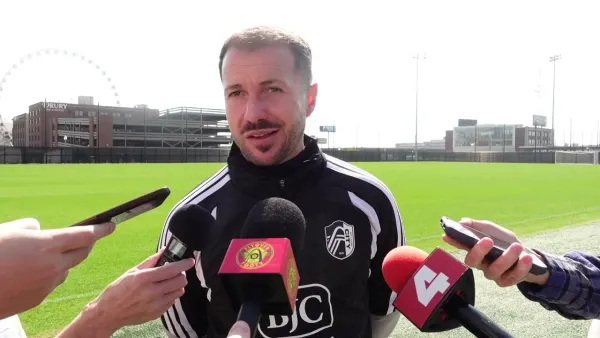
The incredible stakes of the 2025 MLS Cup Final.
The 2025 edition of the MLS Cup Final features the longest road trip in the league, and a tasty showdown between two of sport's greats.

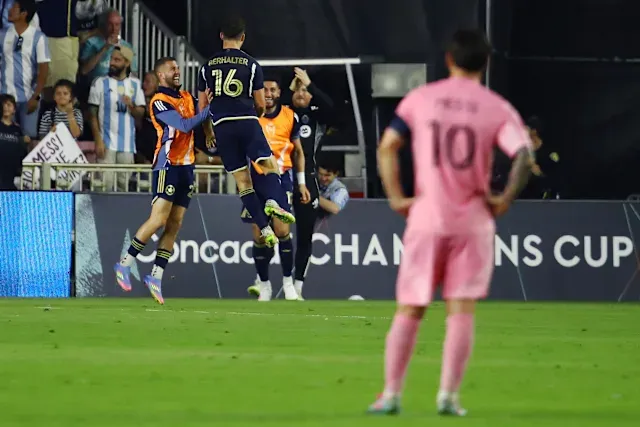
The intracontinental trek from Vancouver to Miami is Major League Soccer’s longest road trip, a 6-hour flight over an incredible 2,800 miles… the European mind can not comprehend.
Now, for the second time this year, the flight will be packed with Whitecaps supporters hoping to watch their 50-year-old club experience unprecedented success.
A year ago, Axel Schuster's firing of Vanni Sartini may have seemed short-sighted.
Sartini had won three straight Canadian Championships and had Vancouver punching above their perceived skill level in each of his three full seasons at the helm.
However, a second straight playoff loss to LAFC begged for a change, and Sartini’s comments following the Whitecaps’ 2023 loss didn’t help the perception that his voice had grown old in the room.
“I took my time with this decision, and it was not taken lightly.” Vancouver Sporting Director Axel Schuster said in the club’s announcement. “We have taken important steps each year, and it is now the right time for someone else to lead this group on the pitch with fresh and new energy.”
No one expected Jesper Sørensen to take the baton so quickly. The former Brøndby manager stumbled in the club’s opening match at Saprissa, losing to the Costa Rican side 2-1 before taking care of business in Vancouver, but quickly found the answers, earning 23 out of 30 points in MLS as the Whitecaps marched through CCC play on their way to the final. Sørensen’s greatest feat won’t be found in his club’s hot start, but rather in how seamlessly he found a role in his system for German legend Thomas Müller.
You’d be excused for thinking the initial rumors of Müller to the PNW were a dream, but that dream quickly turned to reality after Müller met with Schuster and Sørensen. Schuster reportedly made a great impression on his countryman, and Müller enjoyed the pace of life in Vancouver compared to LA or a market like Cincinnati, where he would no doubt be marketed as the German face of their German-influenced city.
The Bayern Münich legend arrives at a time where the ‘Caps could have been in dire straits if the season went sideways. Last winter, the club announced that it would be exploring a sale that could help the club move out of BC Place and into a stadium of its own. While BC Place has long been their home, there is a freedom in scheduling and additional revenue streams that the club needs to tap into for long-term viability.
In a market like Vancouver, that was never going to be easy, but as the drama prolonged across the season, Don Garber’s fanning of the flames could have landed at the feet of a dispirited fanbase. Instead, Garber’s comments, in the midst of this historic run, lit a fire under a fanbase that responded to the tune of 53,957 fans to watch their club finally get past LAFC.
“There is a possibility [of relocation], and that's not the path we want to be on,” Garber said at the club’s media event last month. “Those restrictions and those challenges make it untenable for the Vancouver Whitecaps. Economically, they don’t participate in any revenue.
“I’m here on a mission to try and figure out ways we can capitalize on all the success of this club.” Garber continued. “To try to move from being successful on the field and having community connections while being in the bottom of our 30 teams in revenue, and in the top between 50-25% in attendance.”
Now, on the eve of their first MLS Cup, the players have added momentum to reward those supporters back in Vancouver.
On the pitch, Müller quickly fit into Sørensen’s play style and became the icing on an already indulgent cake.
Since the addition of Müller, Vancouver’s only loss came following Mathias Laborda’s 11th-minute red card against FC Dallas. Over that 15-match span, the Whitecaps racked up a +24 goal differential. The switch into a more fluid 4-2-3-1 (it’s not always as simple as that) has helped the Whitecaps insert more controlled chaos into their attack, leaving room for Müller (or Ryan Gauld since returning from injury) to exploit the space underneath Brian White.
It worked to great success in Saturday’s win over San Diego.
The Whitecaps flew despite a few high-profile absences from the LAFC victory, Triston Blackmon’s second yellow, and Belal Halbouni’s injury. Sørensen wasn’t worried, defending in more of a midblock against San Diego’s desire to completely control possession. The Whitecaps allowed San Diego to methodically build in possession and push higher up the pitch, using that forward progression against them to spring dangerous counterattacks, pinning San Diego into chaotic defensive moments.
San Diego may have controlled possession and tilted the pitch in their direction, but they did not control the match. Vancouver dominated through a first half that saw SDFC control 58% of possession on just half of an expected goal. Leading 3-0, Vancouver could use San Diego’s desperation against them, and while SDFC improved on their 1 shot on target in the first half, they didn’t create nearly enough to erase the deficit.
Sørensen’s game plan was perfect.
Young fullbacks Tate Johnson and Edier Ocampo did the job out wide, but it was Emmanuel Sabbi and Ali Ahmed who really pressured in the wide areas. The duo led the Caps, winning 13 duels, and highlighting how Vancouver was so successful in executing their game plan. Cram into the middle third in a compact block, but aggressively push forward into the wings once possession is won.
Once out wide – or in the half spaces – Caps players then looked to find White leading the attack or Müller plugging the space underneath. Those first balls in would be cleared by SDFC defenders, but those balls would quickly come back into the box after finding Sebastian Berhalter or Andrés Cubas.
The game plan in Fort Lauderdale will have to change with Inter Miami also comfortable hitting on the counter, but there’s no question that Vancouver was the better team this past weekend.
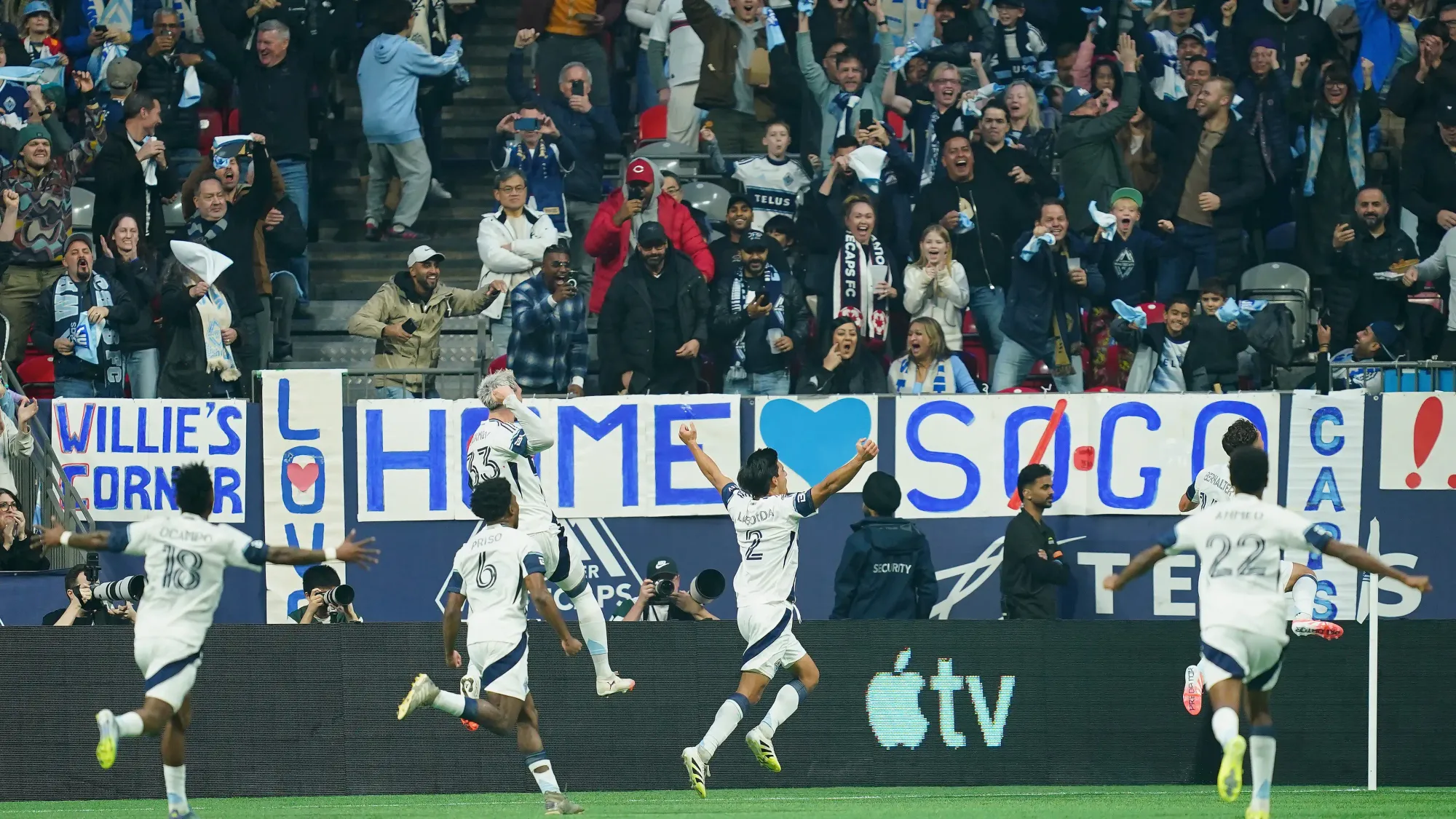
Meanwhile, with his back against the wall after Luis Suárez picked up a suspension – stop me if you’ve heard that one before – Javier Mascherano may have discovered a few important things about his Miami side.
In the absence of Suarez, 19-year-old Argentine Mateo Silvetti stepped in next to Lionel Messi at the top of the formation. Suddenly, Miami’s rest defense was quick and limber, and Messi’s lack of mobility was mitigated. Instead of clubs being able to simply bypass the first line of Miami’s defense. It’s notable that Miami’s sudden defensive transformation – allowing just 7 goals since October 1st – occurred after Mascherano’s discovery that his formation had more flexibility with one of Silvetti or Mateo Allende up top.
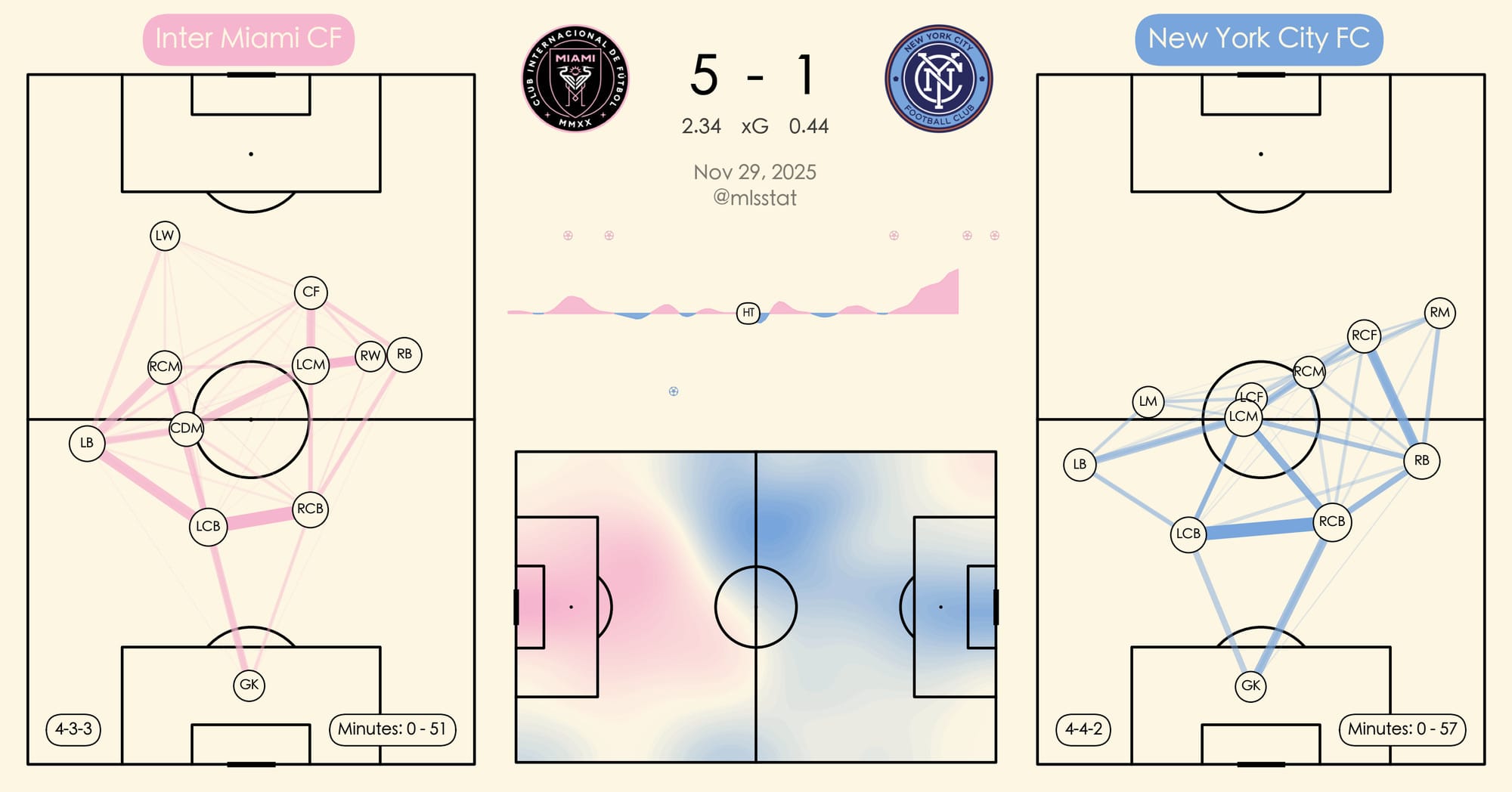
Mascherano’s other personnel decision was much more obvious. Óscar Ustari had been a bad shot-stopper this season. Ustari hit rock bottom in Miami’s 3-5 home loss to the Chicago Fire. In that match, Ustari’s performance – preventing -1.15 goals on 2.39 expected goals against – was the difference.
It had to happen eventually. Ustari had the 4th-worst shot-stopping record in MLS this season, and the three goalkeepers with worse PSxG+/- numbers (a measure of the quality of shots a goalkeeper faces) were keepers outside of the playoff picture.
Following that loss, Mascherano made the call to give 23 year old, former Phoenix Rising Keeper Rocco Ríos Novo the gloves.
IMCF has won 7 of 8 matches since the change, with the only loss coming in match 2 against Nashville SC. Miami has suddenly become defensively stout; some of that is in the formation and personnel, but Ríos Novos has also given the Herons top 10 shot-stopping in a position that was previously the biggest chink in their armour.
The changes had to happen. The joy found in Vancouver’s reckless optimism is juxtaposed by the need to win an MLS Cup for the Lionel Messi project to be ruled an on-field success. Outside of the initial Leagues Cup success, Miami’s tournament success has been fleeting. A USOC Final loss in 2023 as Messi sat out, a shocking first-round exit in 2024’s MLS Cup Playoff after a historic regular-season Supporters’ Shield run, losses in the quarter and semifinal of the Concacaf Champions Cup, and a heated loss to Seattle in this year’s Leagues Cup Final.
Do any of those runs matter if one of the sport's all time greats never wins an MLS Cup in Miami?
Off the pitch, it’s a different story.
The Lionel Messi project has been a success – even if some fans feel differently. IMCF has drastically improved its revenue numbers, MLS has seen international growth, and the numbers for this year’s MLS Cup Playoffs have increased by 23% according to the league.
*The league’s stars in marquee games combined with Apple’s decision to pull matches into the general Apple TV paywall ahead of next season’s dissolution of MLS Season Pass.
The 2025 Final has a much different feel compared to the league’s prospects a year ago. Such is the nature of a knockout competition in a parity-driven league… but now that the stars have somewhat aligned for another installment of Müller vs. Messi, MLS has lucked into a big marketing opportunity ahead of next year’s World Cup and subsequent calendar shift.
There finally seems to be momentum as MLS’s newest villain looks for vindication against MLS’s feel-good story in Sebastian Berh… err… Thomas Müller’s Vancouver Whitecaps.
Now, it's all down to the execution.