The NWSL's High Impact Player rule grants too much authority to Euro-focused media.
The NWSL announced its criteria for the newly established High Impact Player mechanism. The criteria have issues, and the NWSLPA has already pushed back.


The NWSL has been working diligently on a new salary mechanism that aims to give clubs the necessary resources to compete in an increasingly global marketplace. To that end, the league officially announced its criteria for the High Impact Player mechanism today, ahead of the official opening of the January transfer window.
The criteria are as follows:
Players must meet one of the following commercial or sporting criteria to be considered a high-impact player in any of the past two years:
- Player is on SportsPro Media Top 150 Most Marketable Athletes
- Player is selected in the Top 30 in Ballon d’Or voting
- Player is selected in the Top 40 of the Guardian Top 100 football players
- Player is selected in the Top 40 of ESPN FC Top 50 football players in the world
- Top 11 minutes played for the USWNT
- Top one (1) minutes played for USWNT
- Player selected as NWSL MVP Finalist
- Player selected to the End of Year NWSL Best XI First Team
Happy Festivus.
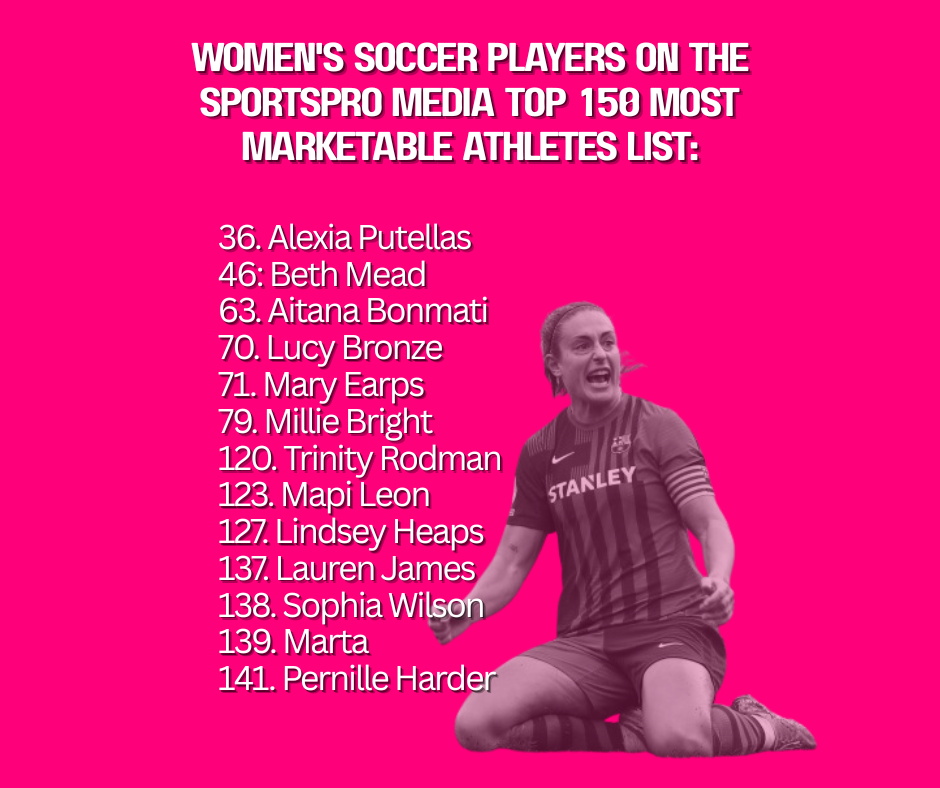
In general, this would allow eligibility for just 75 players at the time of writing. In practice, these are most of the players that one would expect to fetch high-dollar deals; there are a few problems.
- This doesn’t solve the sub-elite USWNT player dilemma that saw Alyssa Thompson leave for Chelsea’s high-dollar offer. Say Michelle Cooper would be offered a similar contract, the Current wouldn’t have the power to match, given Cooper’s spot outside of the top 11 of USWNT minutes and the global media’s blindspot for NWSL players. This mechanism fails to solve the fundamental issue at hand, and heaps loads of pressure onto Emma Hayes's shoulders now that a potential dollar figure can be tied to USWNT minutes.
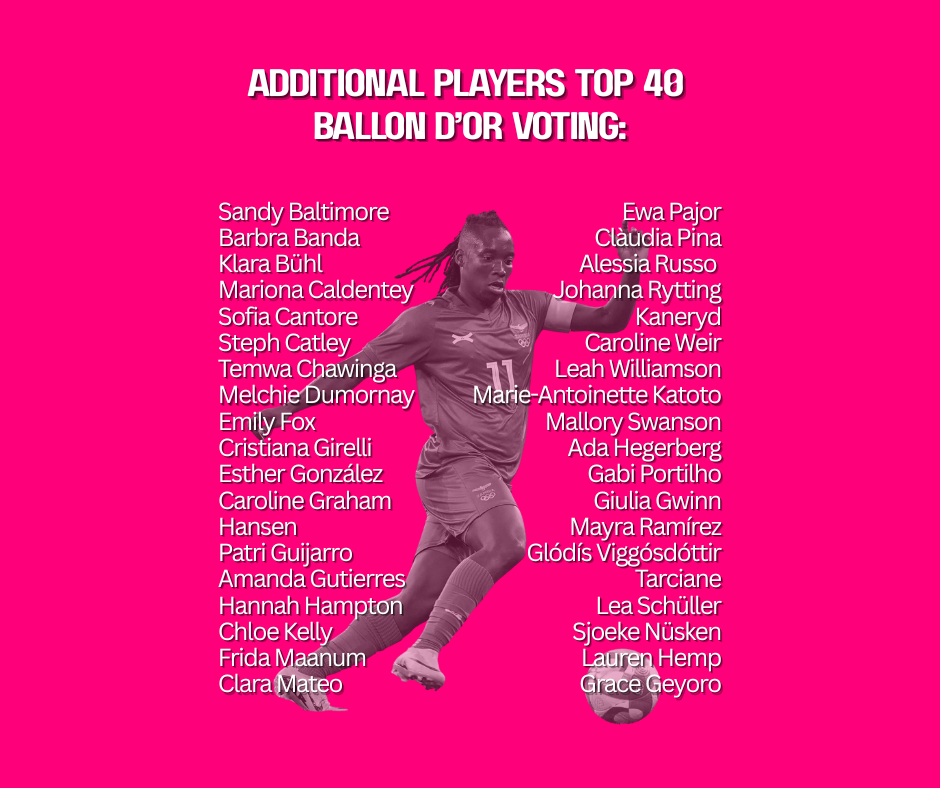
- The second problem is granting ESPNFC and The Guardian such an outsized role in deciding what players are eligible. Outlets – except mine, of course – are beholden to content that generates clicks, meaning that lists are created to generate conversation more than they are to be seen as a bible on the best players in the world. These outlets are Euro-centric and discount the NWSL’s accomplishments in the global market. The NWSL is at the very least a top-2 league in the world. Yet, Temwa Chawinga was the lone NWSL player in the Guardian’s top 10, only 6 players were represented in the top 40, while Trinity Rodman was the sole American NWSL player at #35 on the list.
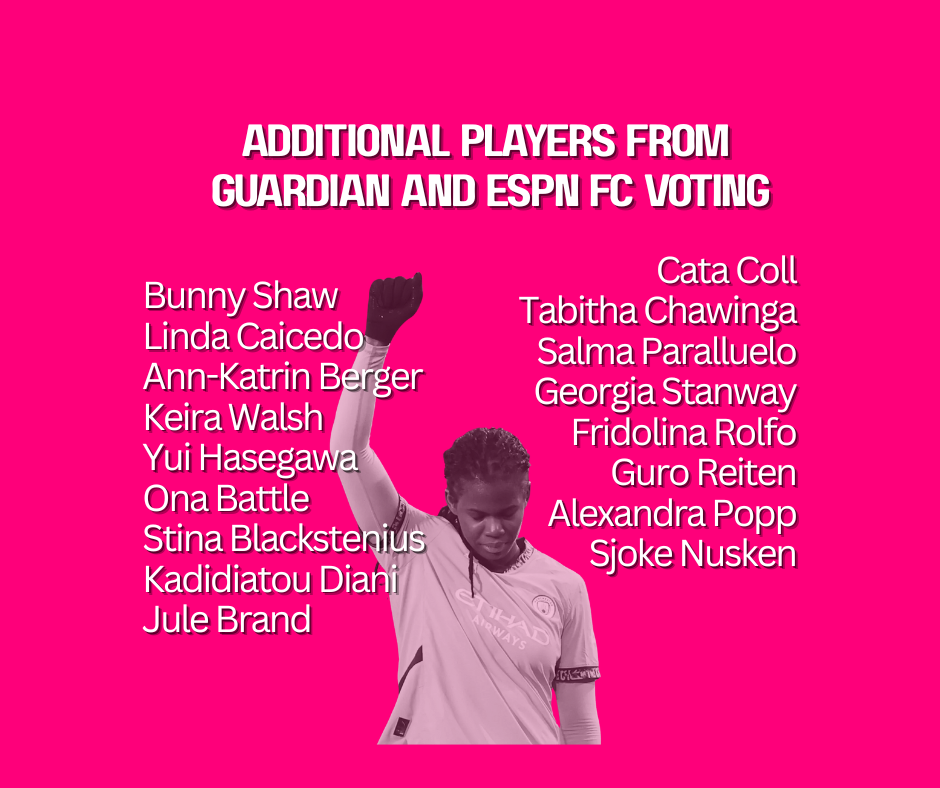
The league is relying on media personalities who clearly don’t respect its quality of play to dictate player eligibility. Including the top 11 in USWNT minutes helps catch a few of those players, but not all of them. Notable exclusions would be Michelle Cooper, Emma Sears, Reilyn Turner, Gift Monday, and Jaedyn Shaw, all players who ranked in the top ten of xG or xG per 90 in 2025.
There's an issue of integrity where media members have agendas outside of covering the NWSL, and the lack of league representation on lists that are supposed to keep players in the league should have been a sign to rethink the criteria.
When the league hands power to media that don't know the ins and outs of the league, then it will continue to undervalue its own talent and lose players that are on the cusp of breaking into the next tier of global soccer stardom.
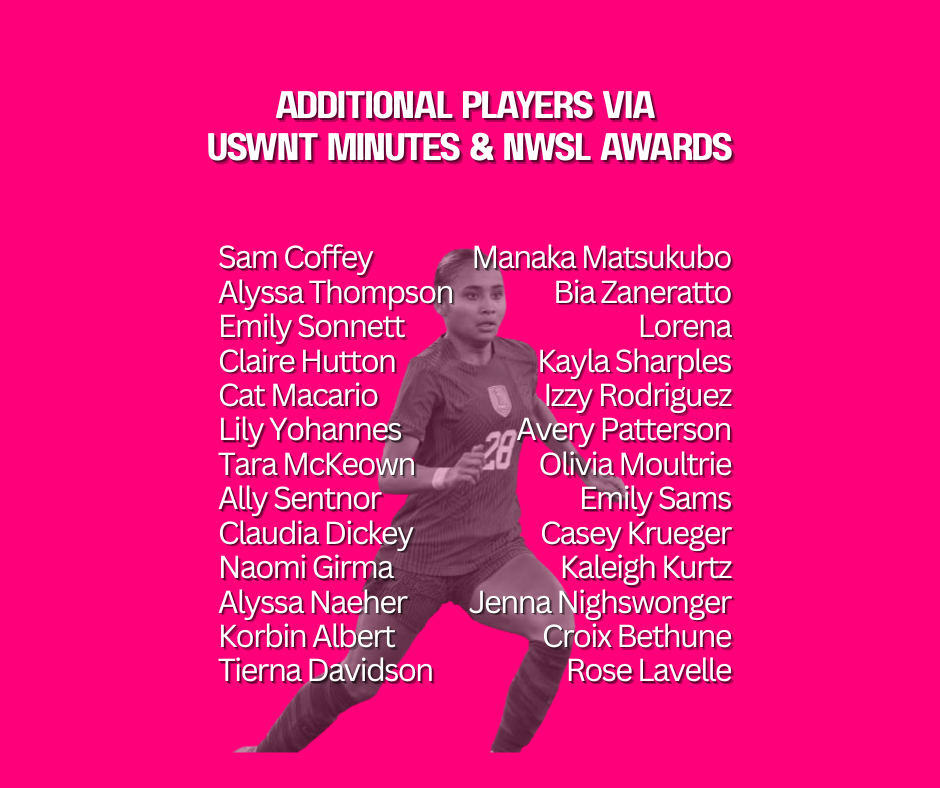
It isn’t that likely that clubs would have to worry about offering a deal to a player who doesn’t qualify; that cap will still increase – as will the HIP threshold – but it’s an added layer of complexity that doesn’t need to be there.
There’s a growing divide within the league.
Some owners want to invest in the league, knowing that investment in world-class players is just as important as world-class facilities, but some owners won’t agree to any increase in spending if it doesn’t result in immediate growth to their club’s valuation. This mechanism is a way to appease those owners while attempting to give the league's ambitious owners the ability to spend above the current cap.
But what’s the point?
If clubs are willing to spend that extra $1,000,000, and expansion clubs are willing to spend $350,000,000 on expansion fees and facilities, then why muddy the waters?
The added complexity will only hurt fans who want to stay engaged in salary cap discourse… well… maybe that’s the point. More contract transparency would lead to better pay.
The NWSLPA has already pushed back on the league’s rollout, even as the league claimed consultation with the PA. The league does have the ability within the CBA to adjust the cap at its own discretion, but the PA doesn’t see this as adjusting the cap.
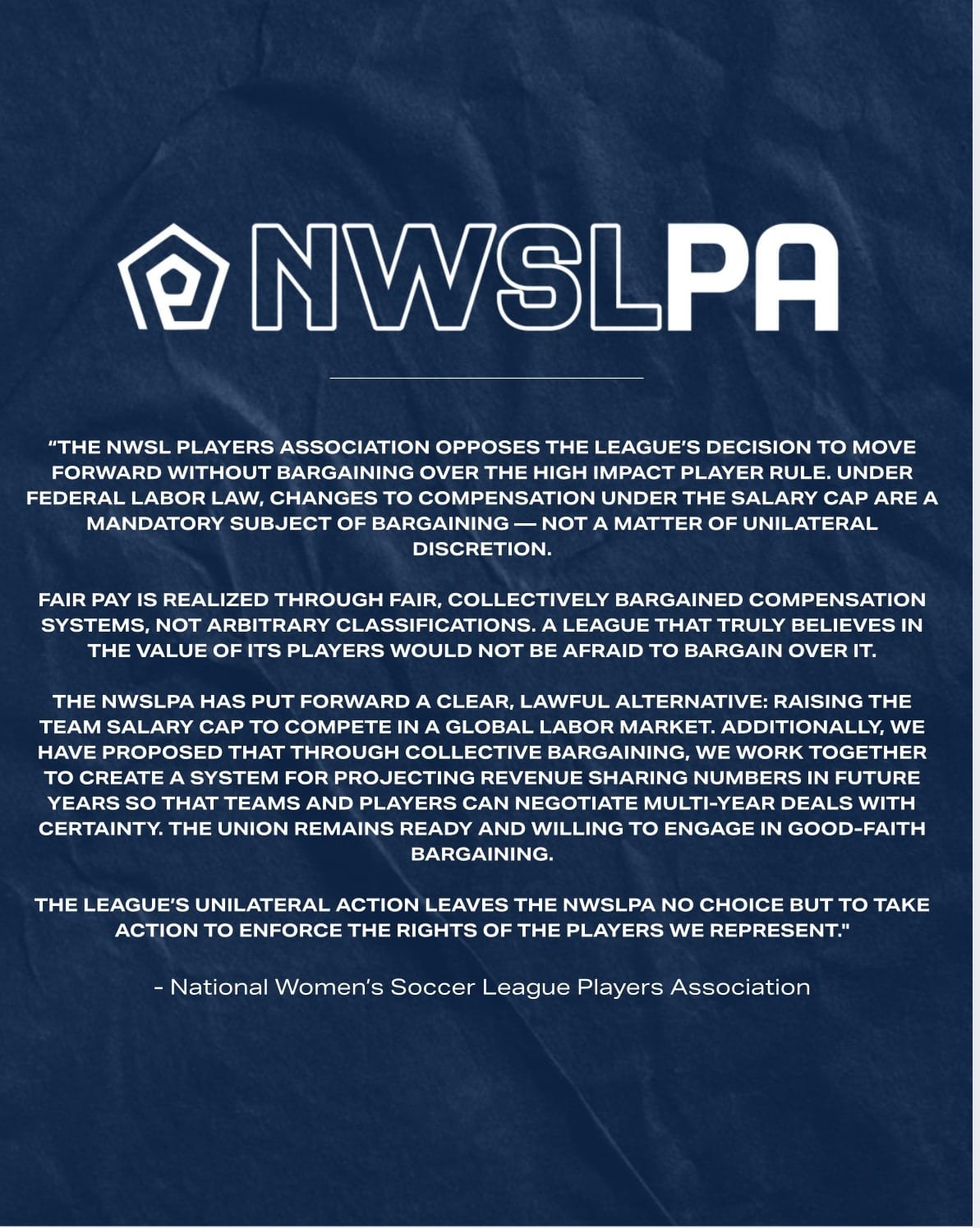
The NWSL sees this issue as an affront to CBA mandated Free Agency and a fundamental change in player compensation that should trigger a return to the bargaining table.
Does this rule help?
Maybe, but the league has stepped on yet another rake as it attempts to please both players and its less ambitious owners while applying a veneer of NFL-esque central command.
Meghann Burke and the NWSLPA have seen right through the attempt, filing another grievance separate from the grievance filed on behalf of Trinity Rodman earlier this month.
It’s looking more likely that the players will have to take action this offseason. Jessica Berman does not appear capable of stepping down on an issue that would hand more power to the NWSLPA, and the PA won’t give up on an issue that it sees as fundamental to honoring the current CBA.
Never a dull moment in the National Women’s Soccer League.
This story is still developing. Subscribe to stay informed.