In this political moment, St. Louis Supporters yearn to be heard.

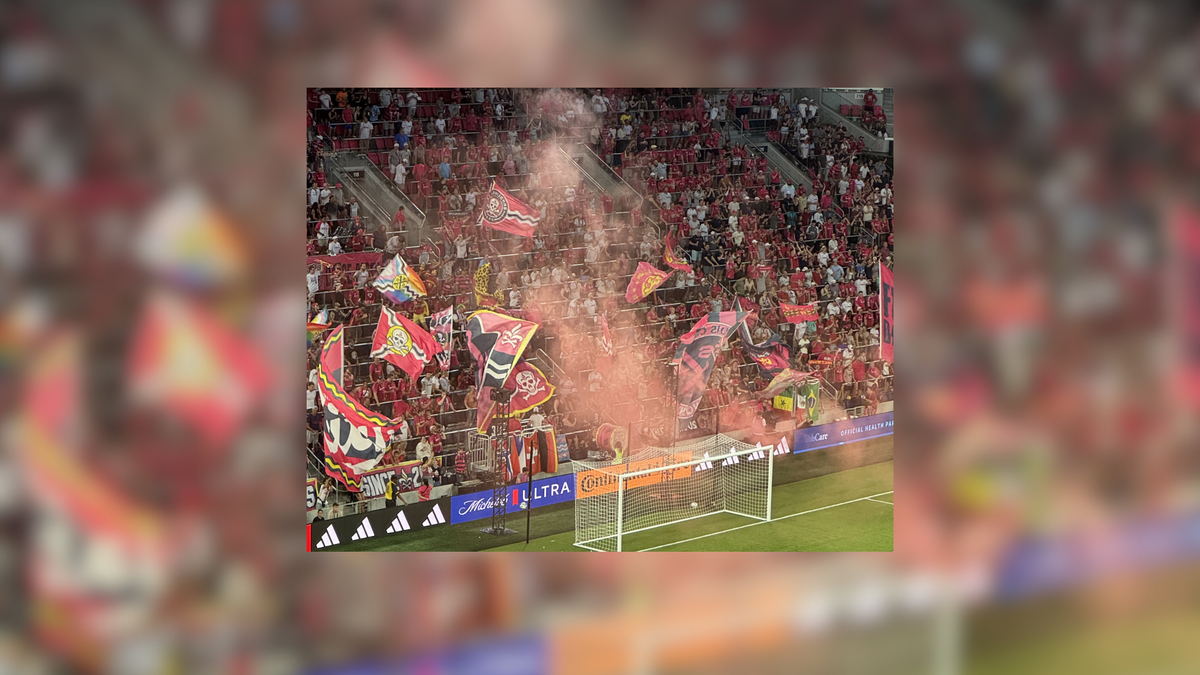
On the eve of the 2026 season, supporters across Major League Soccer are gearing up for a new year of celebrating the beautiful game and another year of dialogue around expression in their spaces.
In St. Louis, that meant weeks of planning and one long, rainy paint-splattered Saturday, huddled inside the St. James the Greater Catholic Church gymnasium. Inside, the nearly finished canvas stretched baseline to baseline while volunteers from the St. Louis City Punks and other St. Louis CITY SC Supporters Groups (SG) carefully brought the first tifo of the season to life.
Like many aspects of SG leadership, tifo planning is a labor of love, but for SLCP, the year’s first afternoon at St. James felt bittersweet.
Earlier in the week, St. Louis’s SGs met with their CITY SC club partners for an annual refresher on the club’s Fan Code of Conduct (FCoC) and discussed the sections approved items for the 2026 season. In that discussion, SLCP learned that two of the group's items had been denied for the upcoming season.
The items: one Trans-inclusivity sign reading “Love Always Wins” and a Black Lives Matter flag, which are typically affixed to a railing in the group’s section, were denied based on the club’s stricter enforcement of its own FCoC policies.
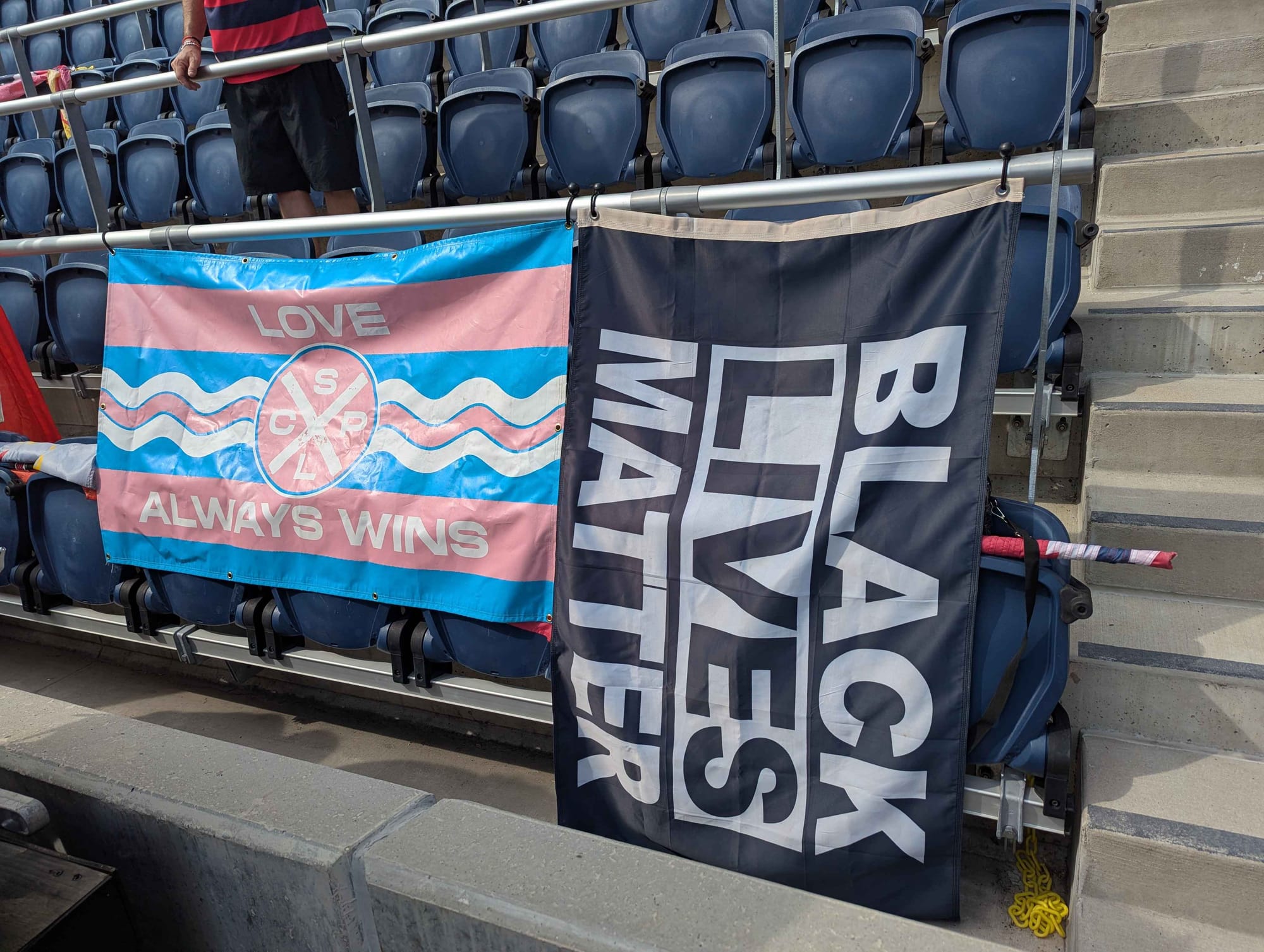
The decision citing the St. Louis CITY SC FCoC states that all flags, banners, and signs must be “related to the event”, meaning that signage not specifically related to the club or its SGs will be denied outside of the club’s theme nights.
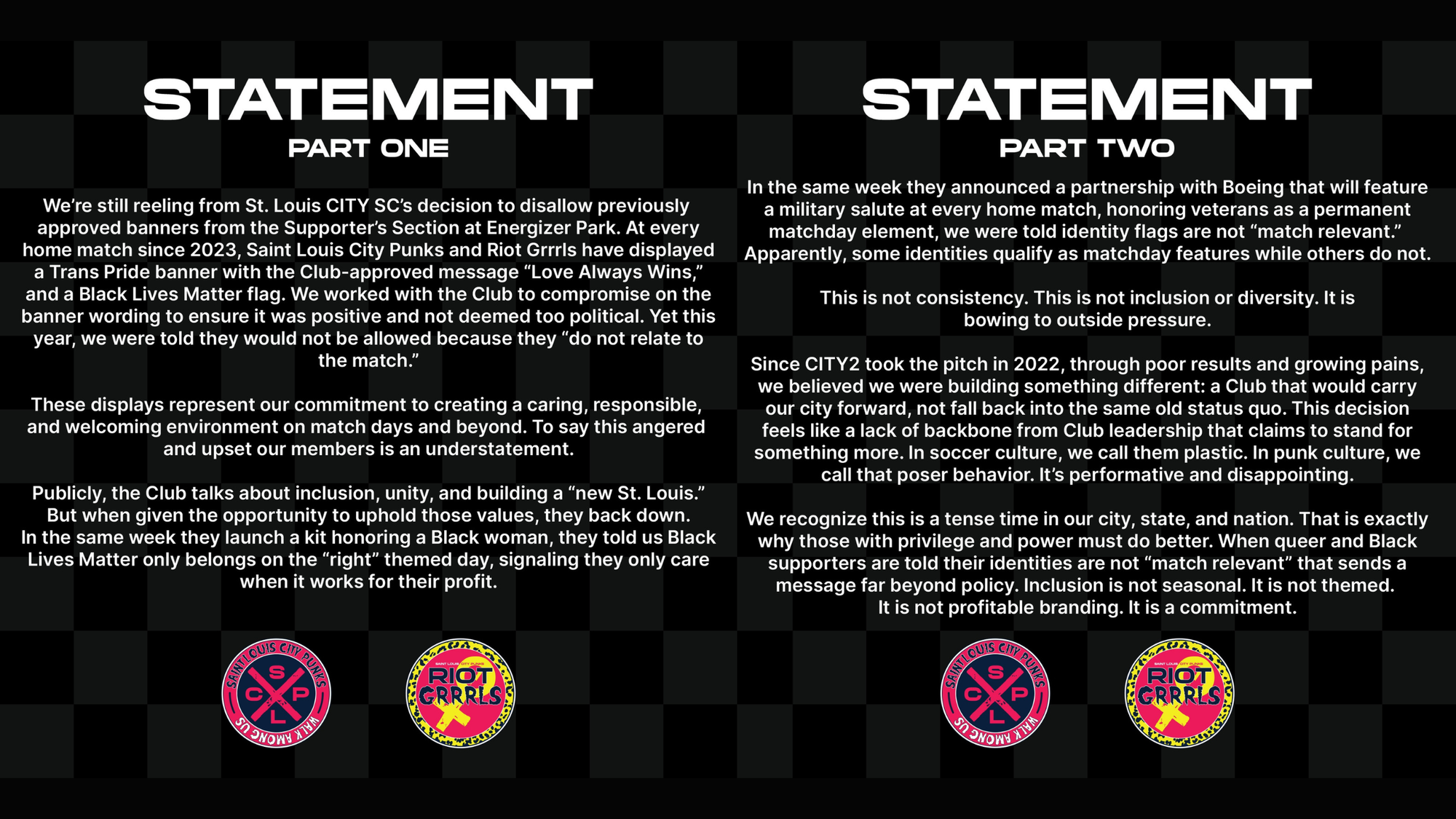
“We’re still reeling from St. Louis CITY SC’s decision to disallow previously approved banners from the Supporter's section at Energizer Park.” The group's official statement read. “These displays represent our commitment to creating a caring, responsible, and welcoming environment on matchdays and beyond. To say this angered and upset our members is an understatement.”
SGs are unique in the North American sporting landscape.
Not only taking responsibility for the atmosphere that is often celebrated by the league – and a selling point in player recruitment – but also acting as a community for many supporters who haven’t felt welcome in other fandoms. The flags, signs, and banners have become a calling card of the most active SGs, but the content of those displays has become a constant topic of conversation among supporters and clubs.
Throughout MLS, the conversation around impromptu signage took center stage in 2025.
As ICE/DHS operations in MLS cities resulted in members of the league’s various Latin-American SGs opting to stay home, while federal operations tore apart their communities.
Their absence was plain to see.
Last May, things came to a head in Nashville when, out of an abundance of caution, members of the club’s Latino SG, La Brigada de Oro, opted out of that weekend’s matchday. Fellow SGs chose to support by carrying the group’s banners in their honor along with signs reading “We are not all here” and “No estamos todos aqui”.
Nashville was far from the only market affected, but enforcement of the signage was not universal across MLS clubs. More often than not, SGs had to fight for their preferred expression, but as the season marched on – and as political tension ratcheted up elsewhere – MLS attempted to curtail the displays.
“We want to ensure that we’re having displays that are not going to incite anyone,” MLS Commissioner Don Garber told the Guardian last July. “The best way to do that is to have the policy we have, which prohibits having political signage or anything to do with legislative acts on display in our stadiums.”
MLS itself removed certain language that banned “political” signage in its league-wide FCoC following protests centered on Iron Front and antifascist flags in 2019. Following months of fan protests, a compromise was reached through dialogue among the league, Timbers Army, Emerald City Supporters, Gorilla FC, and leaders of the Independent Supporters Council.
However, that wasn’t a green light for any signage in its Supporters Sections. The current MLS FCoC does include language banning “Displaying signs, symbols or images for commercial purposes or for electioneering, campaigning or advocating for or against any candidate, political party, legislative issue, or government action.”
MLS’s FCoC oversees its specific clubs’ FCoC framework, while most markets also require approval for flags and signage over a certain size.
That is the crux of the current disagreement in St. Louis.
A source at the club stressed that the decision is not a sign that the club is abandoning the celebration of personal identities within the fandom. The club remains committed to its initiatives throughout the St. Louis area, including the recent partnership with the St. Louis Center of Creative Arts and CITY Moves program – a program designed to keep a dialogue between the club and LGBTQIA+ members of the St. Louis Soccer community. The group had yet to meet for the 2026 season ahead of the RSG meeting described above.
Instead, it’s an increased scrutiny of its own match day FCoC focused on specific match days. That FCoC does not include the enforcement of apparel that could be deemed political in nature throughout the stadium. The club intends to highlight those voices throughout the year, including its Pride Night celebration in September.
The carve-out for specific expressions on specific nights hasn’t been popular with SGs, who feel that the pullback is a result of the club protecting itself from outside agitators instead of listening to its own supporters and standing on its stated values. MLS clubs like St. Louis CITY SC are walking a tightrope in this current political moment. SG leadership understands the nuance but sees the move to disallow these specific banners as an overcorrection.
"It's just disheartening," said Andy Haase, CEO and Co-Founder of St. Louis City Punks. "We would just like to see them stand up for their stated values."
St. Louis CITY SC found itself on the receiving end of a right-wing hate campaign last season after a fan claimed that he was removed from the stadium for wearing a MAGA hat in a now viral video. That incident made waves among right-wing provocateurs, resulting in threats of legal action and weeks of conservative dogpiling on the club’s social media.
Increased scrutiny is a way for the club to protect itself from future incidents. Many of the criticisms following the fans' removal attempted to create a false equivalency around the Pride flags in the North End – flags that have still been approved for the 2026 season.
In an ideal world, outlets like Outkick wouldn’t run with the story and use the fandom's symbols of inclusivity as some “gotcha” moment. The criticism alleged that Pride flags are political speech equivalent to a MAGA hat, instead of acknowledging the differences in personal identity and a hat endorsing the president, notwithstanding that the fan in question wasn't ejected for simply wearing the hat.
Contrary to those commentators, expressing oneself is only political when a specific identity has been politicized by those who wish to legislate them out of society.
SGs like SLCP see this signage as a tent pole in the group’s desire to build an inclusive community where everyone feels welcome and represented – especially centered around a new club that has carved out a unique space in the St. Louis sports scene.
In an ideal world, that wouldn’t be controversial.
Unfortunately, life isn’t that simple in an era where celebrations of Blackness and LGBTQIA+ rights – while residing in a state that is actively antagonizing Trans people and their right to healthcare – are deemed political stances. Safe spaces for expression have been shrinking as institutions bow to government pressure, and SLCP – along with the whole of St. Louis's North End – wants to signal that their community will stand for those who feel increasingly marginalized.
The MLS Season returns next Saturday when St. Louis CITY SC hosts Charlotte FC. When the tifo rises towards the sky, and the crowd cheers the return of soccer in St. Louis, the North End will hope their voices are being considered.
Thanks for reading. This week I'll be looking into last year's top MLS NEXT Pro performers and attempt to forecast the likelihood of breakout performances in MLS this season. If you like thoughtful critiques of American soccer culture and insightful analysis, consider subscribing and supporting.