Four Storylines to kick of Major League Soccer in 2026.
The 2026 MLS season will be notable on and off the pitch.


It's February, you know what that means. Major League Soccer returns this month, with clubs like San Diego FC kicking off CONCACAF Champions Cup play earlier this week. It’s the business end of the preseason, but serious questions hang over America's most diverse major league sport. Hearts are heavy, but we're powering through. Let's get into it.
Politics, Sports, and an inability to hide from Minnesota.
It was a common issue last season as ICE and CBP operations ramped up throughout the country. MLS stadiums cracked down on expressions of political language, some stadiums taking that to the extreme ends of not allowing signage for anything that was “not pertinent to the event.”
Please see our attached statement regarding last weekends CITY match.
— Fleur de Noise (@fleurdenoise.com) 2025-09-10T14:12:10.803Z
That rule in St. Louis came under attack from all sides as footage of a man kicked out of the stadium for refusing to remove his MAGA hat went viral in right-wing spaces last fall.
MLS clubs have aimed to stay apolitical in an environment where politics have become unavoidable. Supporter groups looking for cooperation in their aims of representing communities torn apart by these operations have not found willing partners in their local MLS club. The overwhelming corporate voice seems all the more cowardly in light of mass demonstrations across the country this month following the public killings of Renee Good and Alex Pretti in Minneapolis.
Minnesota United has had to make its own preparations.
While the club has remained publicly silent, there has been a coordinated effort within the club to prepare and protect its foreign players. Players have felt the chaos and uncertainty. "People are scared. We are, too,” Argentine midfielder Joaquin Pereyra told the TwinCities Pioneer Press last Wednesday.
“Whether I’m walking around the neighbourhood, at the supermarket, anywhere. Obviously, that doesn’t guarantee me anything because we’ve seen on the news that people who have had their Green Card and passport in their car, or whatever, are still taken away or treated badly," he added.
It’s hard for clubs to stay politically neutral in an environment like this.
MNUFC has had to maneuver in a reality where federal agents in the streets have hindered their recruitment efforts ahead of the season. Deals for Slovenian midfielder Tomi Horvat and Dutch defender Cherrion Valerius dissipated after both players revealed concerns about living in Minnesota, amidst international coverage shining a light on a community under attack under the guise of an immigration crackdown.
MLS executives have noticed the difficulties of the moment, but that private acknowledgement doesn’t portray a league that is ready to eschew a corporate malaise in exchange for a more vibrant – if not politically active – culture.
Fans and supporters will want to show their support for affected members of their communities, and clubs will have to decide whether to continue down this road while their cities are irreparably damaged.
If last season is any indication, the league is not prepared for the pushback.
At least February will start with a sliver of good news for the Loons. Reports this week state that Colombian superstar James Rodriguez is heading to St. Paul in preparation for this summer’s World Cup. According to The Athletic’s Tom Bogert, Rodriguez would only be a short-term option for MNUFC, but it’s still a big get for a club that needed something to go its way this offseason.
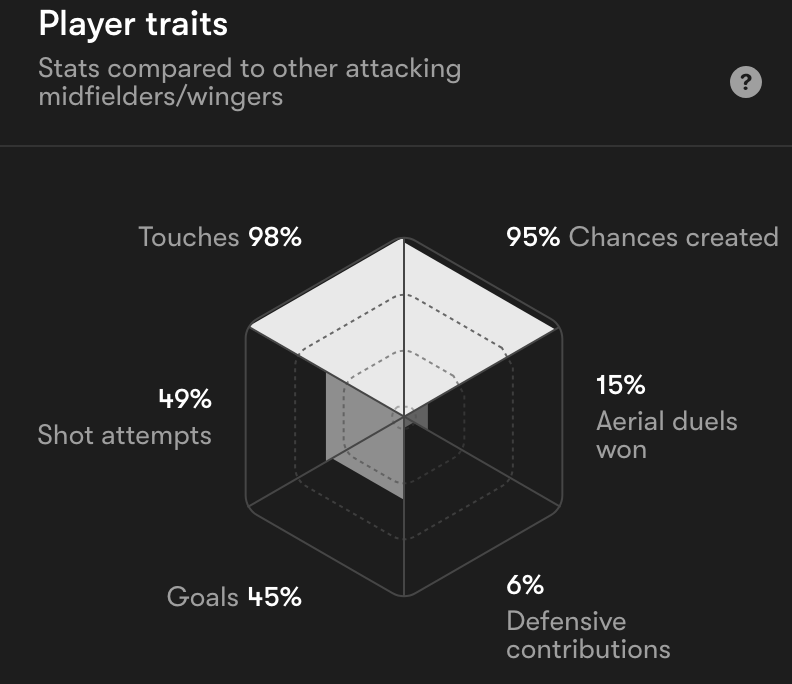
Rodriguez should help MNUFC immensely if he can acclimate quickly.
MNUFC overperformed its underlying numbers last season – especially after the summer transfer window slammed shut without a replacement for Tani Oluwaseyi – mainly down to their performance on set pieces. The Colombian should add sizeable firepower on set pieces with elite delivery from midrange opportunities; Anthony Markanich loves to hear it.
Now, Rodriguez, as a creative but defensively liable 10, has the opposite profile of Oluwaseyi and is against the grain of the profile of player that MNUFC acquired for Eric Ramsay’s style of play.
San Diego FC kicks off 2026 in style.
Speaking of MLS supporters standing up to ICE in their cities, SDFC’s unified supporters group, Frontera SD, made a statement ahead of SDFC’s CONCACAF Champions Cup match against Pumas UNAM on Tuesday evening.
San Diego FC’s official supporter group Frontera San Diego united as one of their own was recently taken into ICE custody.
— SanDiego.Fútbol (@sandiego.futbol) 2026-02-04T02:11:01.274Z
In its first taste of CONCACAF play, Frontera was treated to a dazzling display of SDFC soccer. SDFC fell behind early thanks to a dazzling Robert Morales bicycle in the 11th minute.
It was nervy.
SDFC looked to be in control but couldn’t convert any of its 1.12 expected goals through 60 minutes.
Mikey Varas’s side worked hard to break Pumas down over the final 30 minutes, and finally broke through with 20-year-old Manu Duah’s soaring header. Goals from David Vazquez, Alex Mighten, and Luca Bombino quickly followed in a rout over a visibly gassed Pumas side.
This was an impressive result. San Diego played 9 players under 23 and outlasted the undefeated Liga MX gigantes.
There was some worry building looking out at San Diego ahead of its sophomore season. The Varas extension, coupled with Tyler Heaps publicly denouncing Chucky Lozano’s spot on the squad, could have led to disaster. However, maybe the right move is to offload Lozano and reinvest the DP spot.
It is fascinating to watch San Diego build through other clubs’ youth castoffs. The strategy has built a full roster that’s been able to cope without hitting on all of their U22 spots, relying on youth and competition to supplement the play of Lozano, Dryer, and one of the best CDMs in MLS, Jeppe Tverskov.
It’s tough to see San Diego continuing to plug away with two open U22 spots and Lozano on his way out the door. It seems like Heaps should be working the phones ahead of the Winter window slamming shut, but maybe there is a strong belief in the young depth already in place. The first look of 2026 was successful.
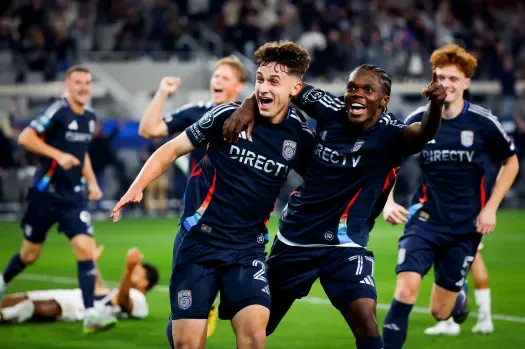
SDFC out possessed, out created, and out shot the Liga MX side.
Heading into the final stretch, they tilted the field in their favor and scored four goals from squeezing Pumas into the defensive third. If this was a fluke, it was a very familiar fluke, with Varas’s side winning in the same way they won last season. If past Champions Cup away legs are any indication, things can change in Mexico, but for an SDFC that was much better away from Snapdragon last season, Pumas will have to attempt to unnerve San Diego’s young contributors. Pumas have more proven depth, but they’ll also have a shorter turnaround before hosting the MLS side next Tuesday.
It’s an impressive position to start the season, especially while relying on young players who haven’t experienced this type of pressure before.
Oh… and the Mo Salah rumors are still circulating ahead of the Summer Transfer Window.
Is there a silver lining in Vancouver?
The Whitecaps were the feel good story of MLS last season, shocking the league across multiple competitions in the first year under Jesper Sørensen. Shock runs to the CCC and MLS Cup Finals bolstered a campaign that saw the Whitecaps win the Canadian Championship and finish 2nd in the Western Conference. There is momentum around Vancouver for the Whitecaps. The acquisition of Thomas Müller helped sell 53,000 tickets to BC Place for the final home match of the season.
However, a peek behind the curtain and there’s obvious trouble for the long-suffering franchise.
The ‘Caps have been on sale since last summer, and have yet to find many suitors. Valued at $440 million by Forbes last spring, Vancouver ranks among the least valuable clubs in the league. The Canadian dollar, and lack of long-term stadium solution — including a recently negotiated short-term lease to play another year at BC Place — sees the club unable to find a buyer.
Club CEO Axel Schuster was not optimistic about the club’s press conference last week, saying, “No one is interested in buying even 1% of this club."
There are clear revenue concerns, and the club doesn’t have control in areas where struggling clubs in other markets can make up for lagging revenue. Schuster admitted to a $40 million CAD gap between where they are and where they need to go to be seen as a healthy asset.
What needs to happen here?
MLS Commissioner Don Garber has previously called the situation “untenable,” and the gulf in revenue outlined by Schuster seems to back up those words.
MLS should be fighting tooth and nail to keep the former NASL club in Vancouver. The city should be important to the league against relocation carrots like Indianapolis, Sacramento, Las Vegas, and Detroit.
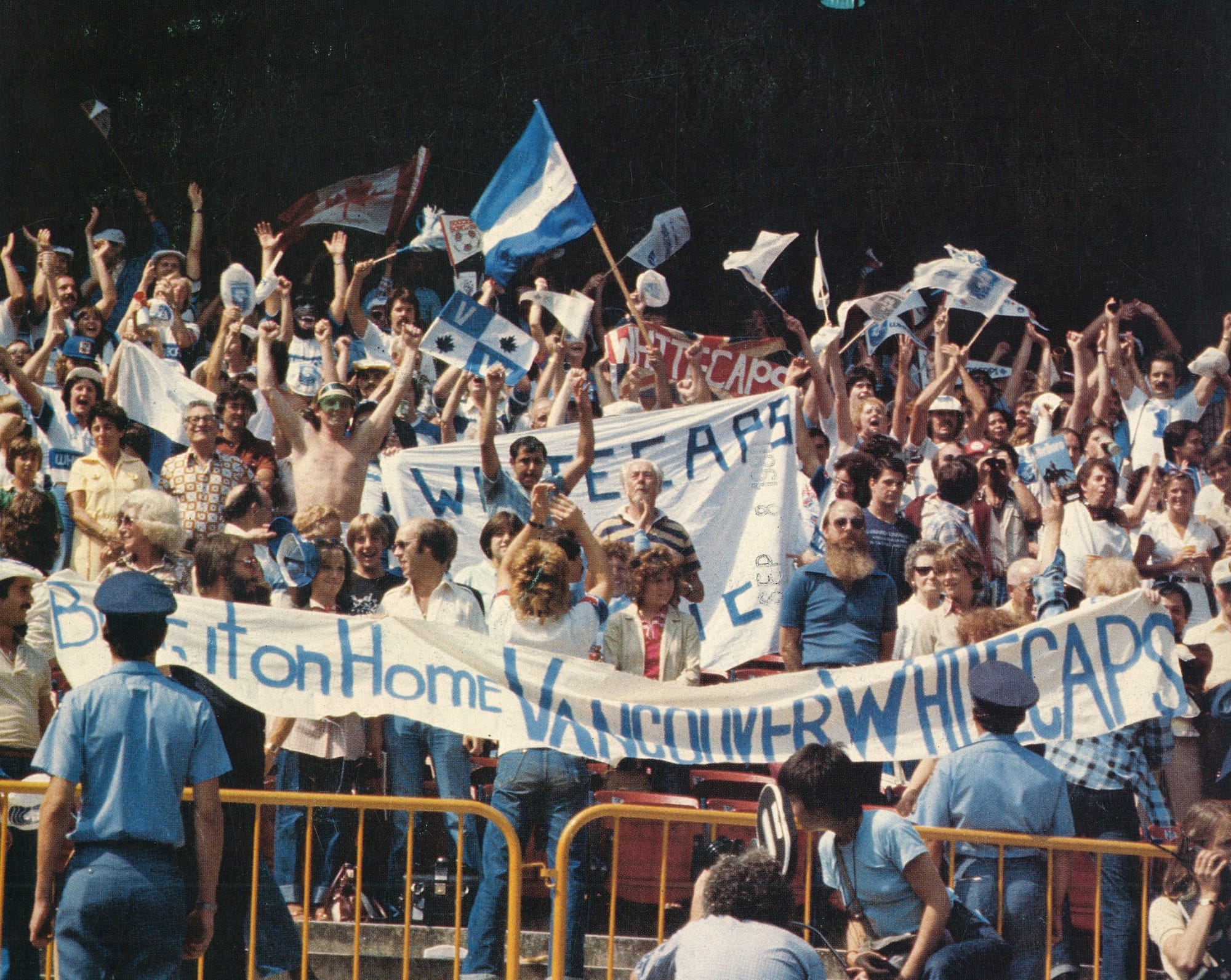
However, the club can not plug away in its current state, they have to increase revenues that would not only attract ambitious owners but also make it clear that the Whitecaps can thrive if they can find a solution to the current stadium woes.
Schuster’s public statements read more like a Hail Mary to drum up support from the Vancouver business community than an encouraging sign. Here’s to hoping there’s a solution that doesn’t involve moving to Indianapolis.
Relocation is far too bleak.
Are MLS’s outgoing Transfers becoming more ambitious?
MLS has reached a tipping point over the last few years. Even before the decision to shift the competition calendar, higher-profile players have looked to MLS as an option before they hit the dying embers of their careers. It’s different from what it was a decade ago, when clubs would take a big swing on a DP that might not fit their roster build and hope to find sub-elite DPs elsewhere.
Obviously, the Messi factor looms large over any discussion of rising profile. Messi can attract players like Rodrigo De Paul and Tadeo Allende to join him in Miami, but it’s elsewhere in the league where the rising profile can be felt explicitly.
Son signing for LAFC, Müller in Vancouver, Timo Werner in San Jose, but it’s the caliber of outgoing transfer that says more about the league’s place in the global hierarchy.
Patrick Agyemang instantly became Derby County’s most important attacker – three goals in four matches at the time of this writing. Tani Oluwaseyi left Minnesota and instantly became an important depth piece for La Liga’s Villareal where he was recently joined by MLS Young Player of the Year Alex Freeman from Orlando City for a fee of over $7 million.
Every transfer window, there have been more examples of MLS players making the move abroad and slotting directly into lineups that would have required much more trust in a past era.
The biggest indicator of MLS’s growth is Atletíco Madrid’s recent acquisition of Obed Vargas.
 Charles Boehm
The 20-year-old Vargas was instantly slotted into the matchday lineup for Atletí’s Copa del Rey match vs Real Betís. Vargas debuted in the 79th minute with the Madrid side leading 4-0. Vargas made his debut next to former Atlanta midfielder Thiago Almada,
It wasn’t a noisy debut, just seven touches and a 1/1 duel rate, but it speaks to the quality of players developing in MLS that Vargas could slot in so quickly after arriving in Spain over the weekend.
The sale might hurt Seattle in the short term – it’s hard to replace a homegrown midfielder who made 81 appearances over the past two seasons – but the reported fee of $3.5 million plus a hefty sell on percentage should pay dividends if Vargas reaches the heights that many expect out of the 20 year old.
The league is approaching a point where promising academy players will have interest from the European superpowers, and – as the league closes the gap in quality – the moves between the US and Europe will continue to build as MLS switches its competitive calendar to more closely align with the biggest buyers and sellers abroad. The quality is at a point where clubs have to make the conscious decision to play academy standouts, with many of those standouts well scouted by the time they finally step onto an MLS kit.
MLS still lags behind the top buyers and sellers globally, but it’s an incremental growth that has former players noticing a stark increase in quality over the past decade. Perception still lags behind reality, and MLS has to open up roster and spending rules, but the underlying stability is there.
Executives have to see these recent successes as a reason to stay hungry.
Opps will point to the disastrous tenures of MLS managers abroad in recent years, but that’s a topic for another day.
Thank you for reading.